
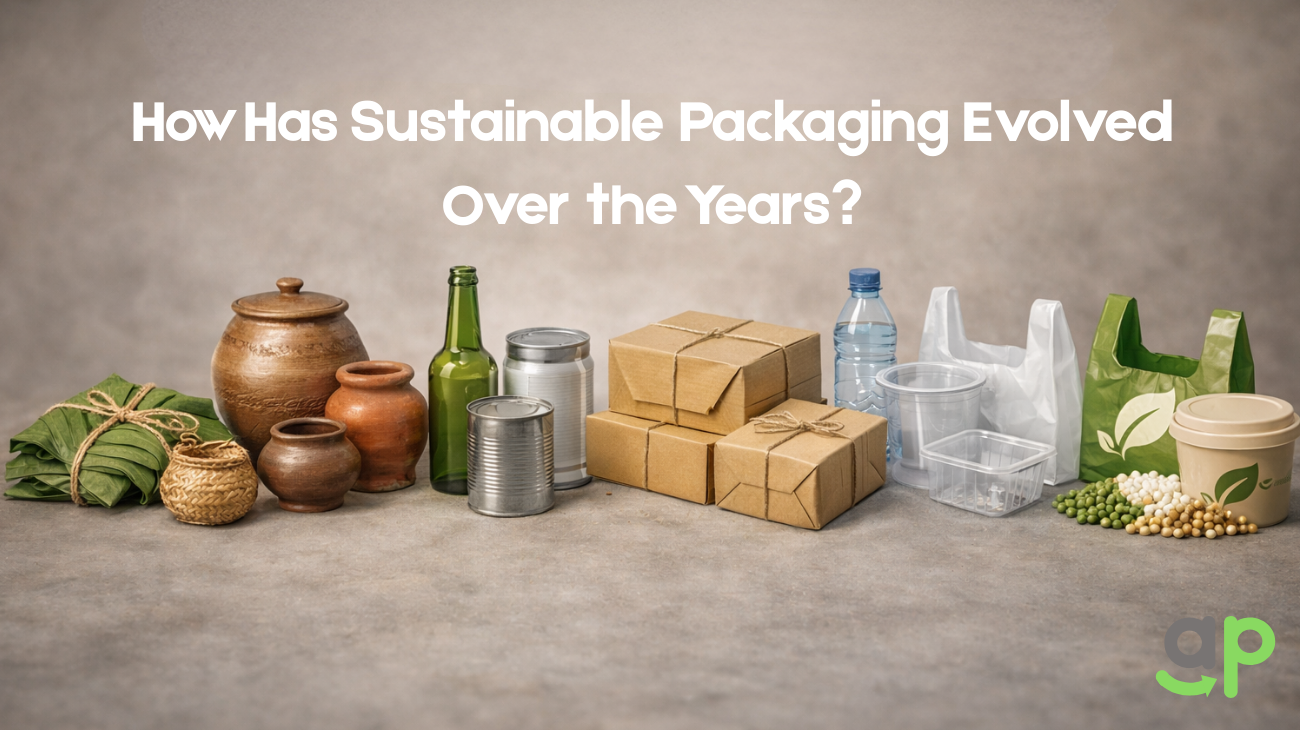
In recent years, the ways in which business is conducted have undergone enormous transformations. Without question, sustainability has been at the forefront of these changes. From recycling schemes to solar power and carbon offsetting, more businesses than ever before are doing their part to be sustainable.
When it comes to sustainability, however, it’s clear that packaging is an enormous factor. As consumer demand for sustainable, eco-friendly packaging increases, single use plastic packaging is gradually being phased out, in favor of greener alternatives such as aluminum and cardboard.
While a variety of different industries now offer sustainable packaging options, there are certain industries in particular, that have benefited greatly from greener packaging options. The food and beverages industries for example, are reaping the rewards of sustainable packaging thanks to fresher, safer food, lower costs, and greater customer retention. The cosmetics sector is another example and as this industry expands and evolves, so too does its packaging options.
Over the years, sustainable packaging has undergone an enormous transformation, and it isn’t done yet. Here’s a look at how sustainable packaging has evolved over the years.
The Origins of Packaging
Although mass production and packaging may seem like a relatively new concept, human beings have been using packaging for thousands of years.
In fact, delving deeper still, packaging has been used in its most primitive form since prehistoric times. Neanderthals are believed to have once used vines, leaves, grass, and other organic materials to protect and carry food. Even animal horns would be used as drinking vessels for water.
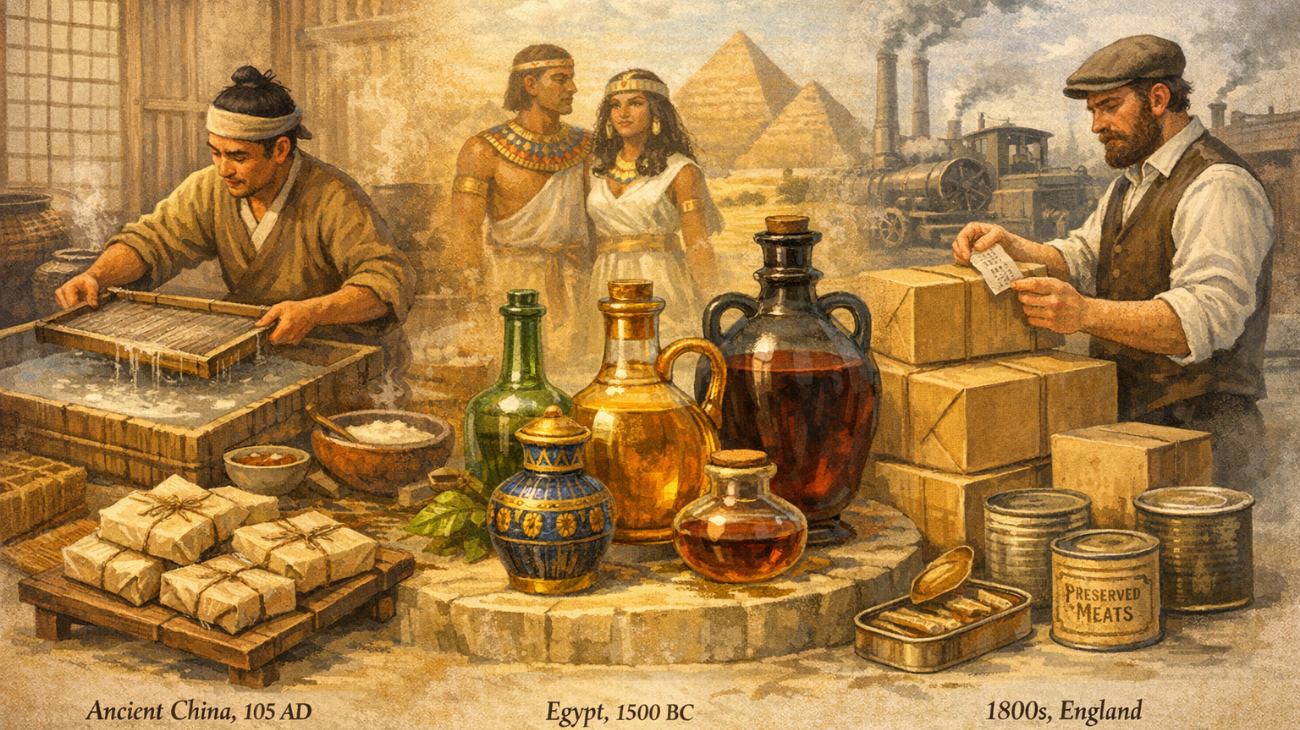
Paper, which is always a reliable option for packaging, not to mention being sustainable, was invented in China around 105 AD. Again, it was used for food preservation purposes so it’s nice to see that some things haven’t changed.
In Egypt, around 1500 BC, glass emerged as a popular packaging choice for precious liquids such as oil, fragrances, tinctures, and perfumes. It would later prove a popular choice for wine and other fermented liquids, and we all know how popular that turned out to be.
In the 1800s, cardboard and metal also proved their worth, with the world’s very first commercial cardboard box being created in England in 1817. These proved integral for the Industrial Revolution in the late 1700s.
The Birth of Mass Production
In the mid-1700s, the business world changed forever, thanks largely to the Industrial Revolution. This particular period in history ushered in a new era of commerce.
Due to advancements in technology, energy production, and transportation, Europe and North America enjoyed huge amounts of economic growth. Instead of manual labor, machine-based production took over. These machines were powered by energy sources such as coal and steam.
As a result, mass-production very much became a thing and suddenly, products and produce were produced and sold in bulk. As a result, the demand for packaging increased drastically. Paper, glass, disposable cups, and metal packaging all proved enormously useful for businesses and consumers. Unfortunately, they also posed their own risks, especially when it came to waste management.
The Plastic Boom
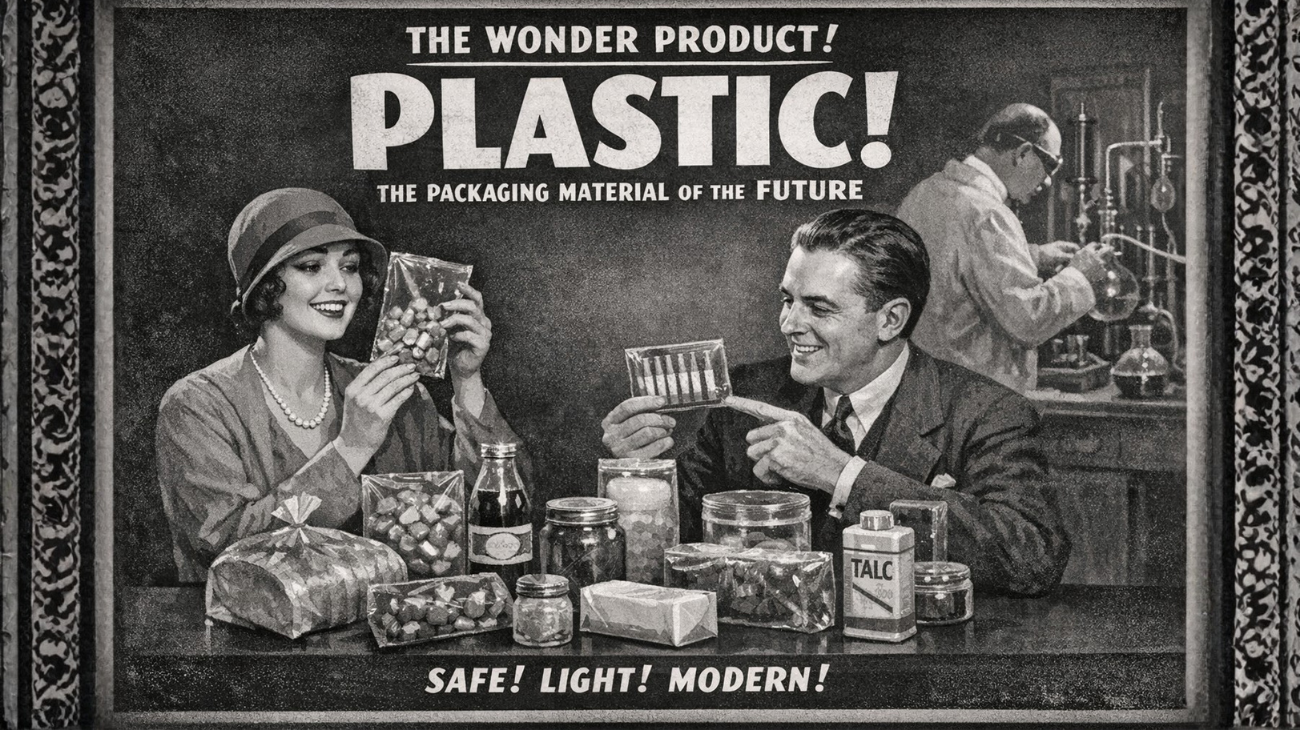
In the early 1900s, an innovative new material was discovered that experts believed would be perfect for packaging. It became known as ‘plastic’.
Thanks to polypropylene and polyethylene, the packaging industry underwent its most dramatic evolutionary step to date. High density polyethylene was a plastic designed to be hard and rigid. This made it perfect for bottles. It was cheaper and easier to produce than glass, plus it was more durable as there were no risks of breakages. Gradually, most liquids that were once stored in glass bottles were instead packaged in plastic. This boom period really took off from the 1950s onwards.
Low density polyethylene, however, was much thinner and softer. It was used to produce plastic bags and thin film lids for food containers such as microwave meals. Polypropylene, and later PET (polyethylene terephthalate) bottles also began taking off during the late 1970s, largely thanks to beverage companies such as Coca-Cola making them their packaging material of choice.
The Rise of Sustainable Packaging
From the 1950s through to the 1990s, plastic packaging dominated the business landscape. If packaging were needed, plastic was almost exclusively the material that businesses turned to.
Unfortunately, plastic would prove to be not only potentially dangerous for humans and living organisms, but to the environment in general. To this day, plastic waste is still an enormous problem, which is why sustainability is now such a pressing matter.
Because of the risks and dangers associated with plastic waste, experts began searching for greener, more sustainable alternatives for their packaging. Materials such as paper, cardboard, and glass were once again in favor, along with metals such as aluminum.
As well as materials deemed kinder to the environment, manufacturers also began looking for materials that could be recycled, and produced and recycled to use less energy. Again, this is where aluminum packaging proves so popular. Not only is it lightweight, it can also be recycled over and over again, and uses around 95% less energy than would be required to produce it from new.
Today, the sustainable packaging industry is more advanced than ever, with a variety of innovative materials now available. Materials such as bamboo, mushroom, and other plant fibers are becoming increasingly common in the packaging industry. Not only are they biodegradable and compostable, they’re also extremely sustainable.
You may also like