
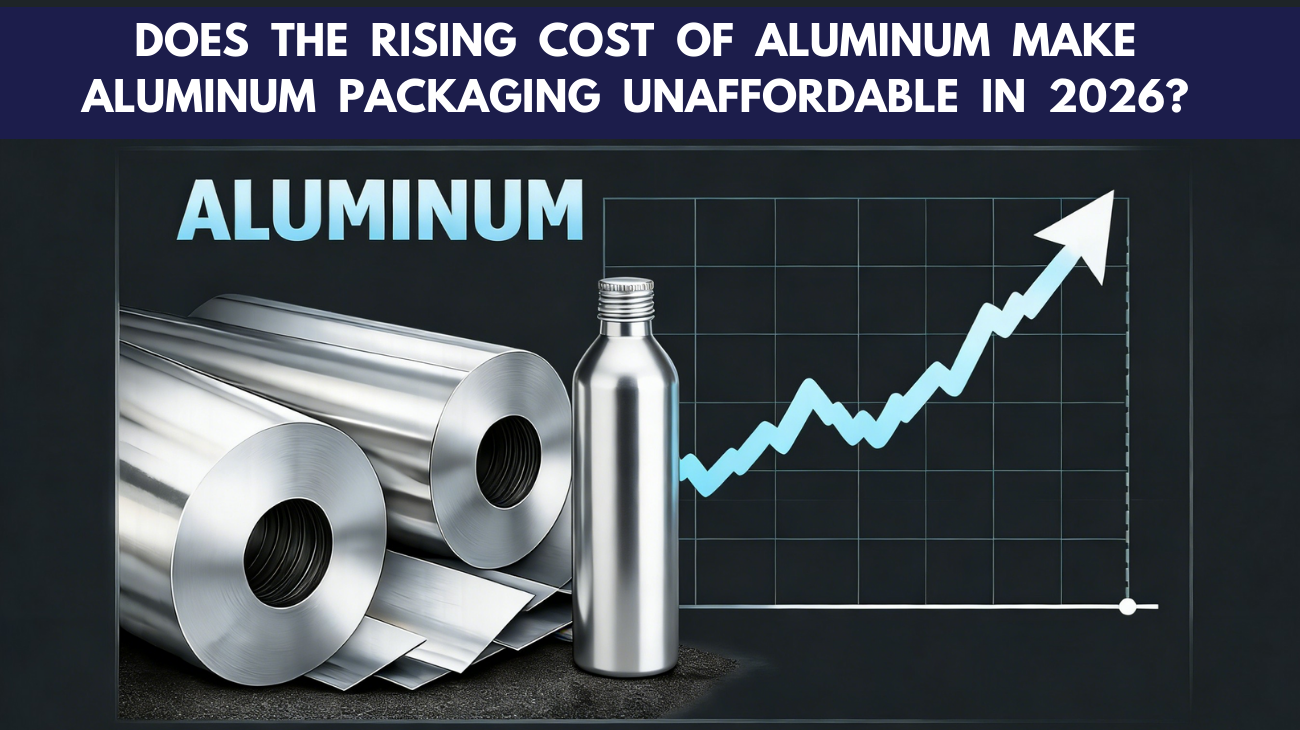
Does The Rising Cost Of Aluminum Make Aluminum Packaging Unaffordable In 2026?
Over the past year, global commodity markets have moved in a clear direction. Prices for materials like gold, copper, and silver have climbed steadily, driven by a mix of inflationary pressure, energy costs, and ongoing geopolitical uncertainty. Aluminum has not been immune to these forces.
While aluminum prices have already increased modestly, many analysts point to the potential for further upward movement as 2026 approaches. Aluminum production remains highly energy-intensive, supply dynamics continue to shift across regions, and global demand shows no signs of disappearing. At the same time, currency fluctuations, particularly a weaker U.S. dollar, add another layer of cost pressure for U.S-based companies sourcing raw materials internationally.
In this article, we take a closer look at why aluminum prices are rising, what is spurring these changes beneath the surface, and how they could affect the aluminum packaging industry in 2026 and beyond.
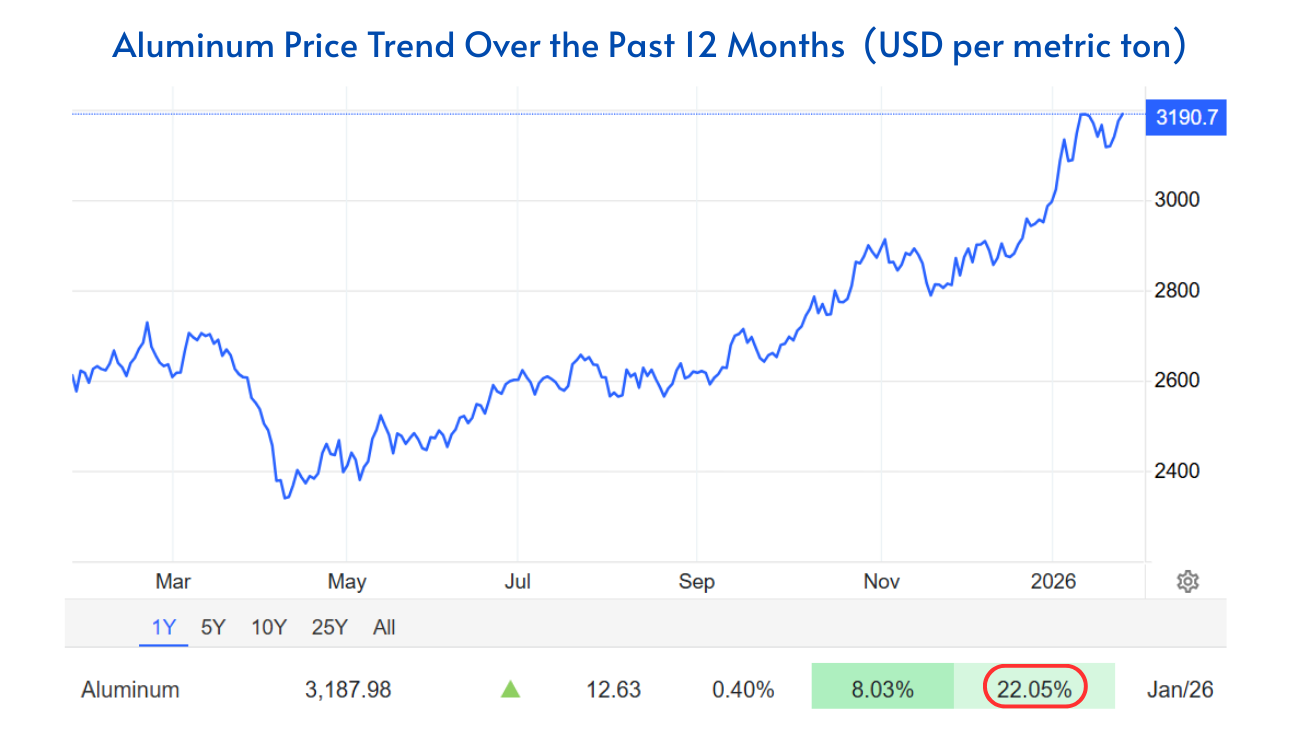
Figure 1: Aluminum Price Trend Over the Past 12 Months (USD per metric ton)
Reference
Story at a Glance
-
Commodity prices are rising across the board.
Over the past year, materials such as gold, copper, silver, and aluminum have seen sustained upward movement, driven by inflationary pressure, energy costs, and global uncertainty.
-
Aluminum prices have already increased modestly.
While the rise has not been extreme, the underlying conditions that influence aluminum pricing remain in place as 2026 approaches.
-
Energy costs play a central role.
Aluminum production depends heavily on electricity, making pricing sensitive to shifts in global energy markets and regional power availability.
-
Supply and demand dynamics continue to evolve.
Demand for aluminum remains strong across industries including packaging, construction, and transport, while production constraints vary by region.
-
Currency fluctuations add pressure for U.S-based companies.
A weaker U.S. dollar can increase the effective cost of aluminum imports priced in global markets.
-
Impacts on the aluminum packaging industry are uneven.
Cost pressure does not affect all manufacturers in the same way, with factors such as scale, sourcing strategy, and contract structure playing a role.
-
Looking ahead to 2026, uncertainty remains.
However, the aluminum packaging industry has historically adapted to price volatility through efficiency, innovation, and long-term planning.
Why Aluminum Prices Are Rising
Aluminum pricing does not move in isolation. Like other globally traded commodities, it responds to a combination of structural, economic, and operational forces that tend to build gradually rather than shift overnight.
One of the most significant factors is the cost of production. Aluminum smelting requires large amounts of electricity, which makes pricing particularly sensitive to energy markets. As electricity costs have risen across many regions, production expenses have followed. In some cases, this has led to output reductions or capacity constraints, especially where energy prices or availability remain unstable.
Image source:Pexels
Supply-side dynamics also play a role. Aluminum production concentrates heavily in specific regions, which means disruptions tied to energy policy, environmental regulation, or geopolitical tension can ripple outward. Even modest interruptions can influence pricing when global demand remains steady.
On the demand side, aluminum continues to benefit from long-term structural trends. Lightweighting initiatives, sustainability goals, and ongoing use across packaging, construction, and transport keep baseline demand intact. While demand growth varies by sector, it has not softened enough to counterbalance rising input costs.
Together, these factors help explain why aluminum prices have already moved upward, and why many analysts continue to watch the market closely as 2026 approaches.
Energy Costs and Production Pressure
Few raw materials feel changes in energy markets as directly as aluminum. The smelting process requires large and consistent amounts of electricity, which means energy prices play a central role in determining production costs across the global aluminum supply chain.
Over the past few years, energy markets have experienced sustained volatility. In many regions, electricity prices have risen due to a combination of fuel cost increases, infrastructure constraints, and shifts in energy policy. For aluminum producers, these changes translate quickly into higher operating expenses. When power costs rise, margins narrow, and production decisions become more sensitive to local conditions.
In response, some producers have reduced output, delayed capacity expansion, or reassessed where it makes economic sense to operate. These decisions do not always lead to immediate shortages, but they can tighten supply at the margins, particularly when demand remains stable. Because aluminum production is geographically concentrated, regional energy pressures can influence global pricing more than they might in more diversified industries.
While energy costs alone do not dictate aluminum prices, they do form a critical part of the cost base. As long as electricity markets remain uneven across regions, energy-related production pressure is likely to remain a defining factor in aluminum pricing discussions heading into 2026.
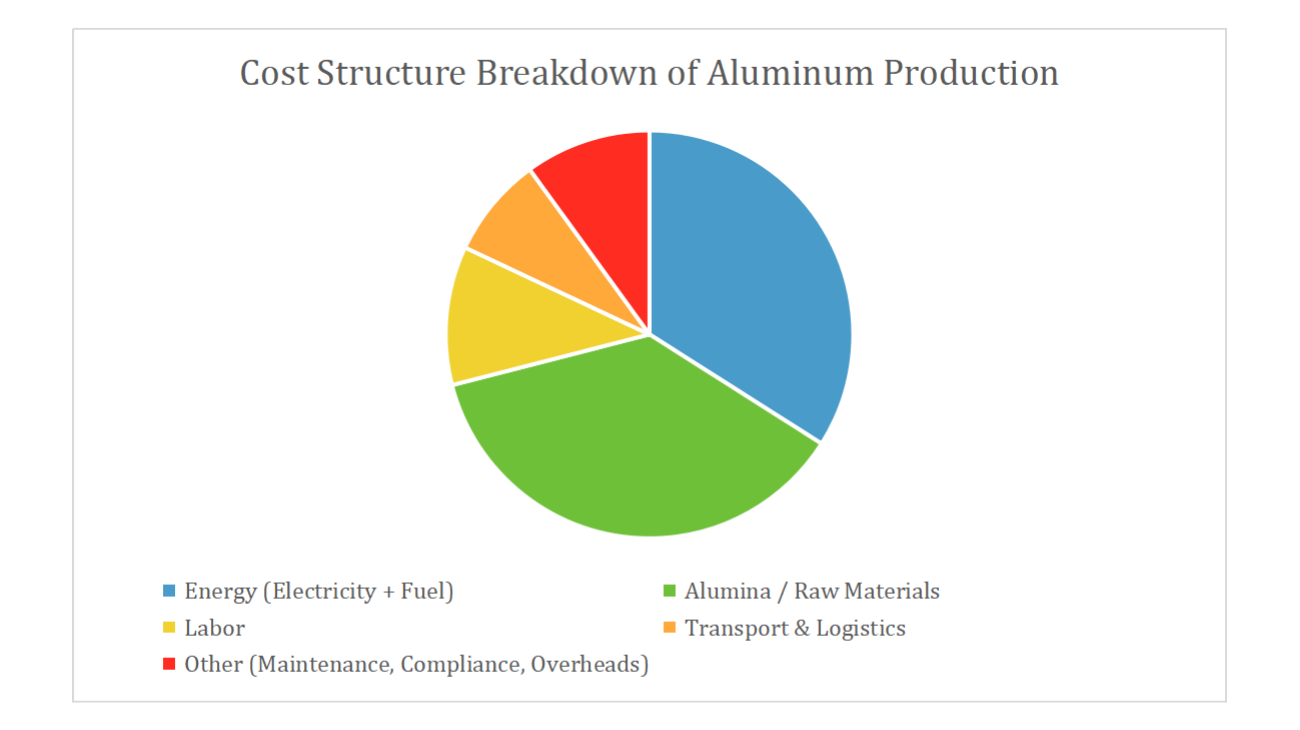
Figure 2:Cost Structure Breakdown of Aluminum Production
Reference
Supply and Demand Dynamics
Beyond production costs, aluminum pricing reflects how well supply and demand stay in balance across global markets. This balance rarely shifts dramatically, but small changes on either side can influence pricing when they persist over time.
On the supply side, aluminum production remains concentrated in a limited number of regions. Output depends not only on capacity, but also on access to affordable energy, regulatory conditions, and long-term investment confidence. When any of these variables change, producers tend to respond cautiously rather than rapidly increasing or decreasing supply. That measured response can tighten availability at the margins, even without a sharp disruption.
Demand, meanwhile, continues to show resilience. Aluminum remains a preferred material across industries that value lightweighting, durability, and recyclability. Packaging, in particular, continues to rely on aluminum for its performance, shelf stability, and alignment with sustainability goals. While demand growth varies by sector and geography, baseline demand has remained steady enough to absorb moderate supply constraints.
This combination creates a market environment where prices respond less to sudden shocks and more to accumulated pressure. Supply does not disappear, and demand does not surge uncontrollably, but the space between them narrows. Over time, that narrowing can support gradual price increases rather than abrupt movements.
Understanding this dynamic helps explain why aluminum prices tend to move deliberately, and why shifts in supply or demand often only show up in pricing trends after they have been in motion for some time.
Currency Effects & the Role of the U.S. Dollar
Aluminum pricing does not operate solely on supply, demand, and production costs. Currency movements also play an important role, particularly for companies operating in the United States.
Aluminum trades globally, often priced in U.S. dollars, and when the dollar weakens relative to other currencies, the cost of imported raw materials can rise in real terms for U.S-based buyers. Even when global aluminum prices remain relatively stable, currency shifts can increase effective procurement costs once conversion takes place.
Over the past year, U.S. dollar value fluctuations have added another layer of complexity to sourcing decisions. For companies relying on international suppliers, currency exposure can amplify cost pressure already driven by energy and production factors. These effects usually surface gradually instead of as a single price jump, making them easy to underestimate (until they accumulate).
| Currency | Symbol | Value 12 Months Ago | Current Value | % Change(YoY) |
|---|---|---|---|---|
| Euro | EUR/USD | 1.03 | 1.07 | +3.9% |
| British Pound | GBP/USD | 1.25 | 1.35 | +8.0% |
| Chinese Yuan | CNY/USD | 0.137 | 0.143 | +4.4% |
Figure 3: Major Currencies Value Compared to USD (12-Month Change)
Not all companies feel this pressure in the same way, though. Businesses with long-term supply agreements, diversified sourcing strategies or built-in currency hedging may experience less of an immediate impact. Others may see currency effects reflected more directly in their input costs.
While exchange rates remain inherently unpredictable, currency dynamics remain an important part of the broader pricing picture. As 2026 draws closer, the interaction between aluminum markets and the strength of the U.S. dollar will continue to shape cost considerations for the aluminum packaging industry.
Direct Impacts on the Aluminum Packaging Industry
Rising aluminum prices do not translate into a single, uniform outcome for the packaging industry. Instead, their effects tend to surface unevenly, shaped by how individual manufacturers source material, structure contracts, and manage production at scale.
For some packaging producers, higher aluminum prices show up first in raw material costs. When procurement relies on spot pricing or shorter-term agreements, price movement can feed through relatively quickly. In contrast, companies operating under long-term supply contracts may experience a delay before higher costs appear, or see those increases spread over time.
Margins also respond differently depending on scale and operational efficiency. Larger manufacturers often benefit from stronger negotiating power, diversified supplier networks, and more flexibility in absorbing or offsetting incremental cost increases. Smaller producers may feel pressure sooner, particularly if material costs account for a larger share of overall production expenses.
Manufacturing complexity adds another layer. Packaging formats that require higher material input, tighter tolerances, or specialized finishing can feel price pressure more acutely than simpler applications. In these cases, even modest aluminum price increases can influence cost calculations downstream.
Importantly, higher material costs do not automatically translate into higher prices for end customers. Many packaging businesses manage this phase through careful cost allocation, phased adjustments, or internal efficiency gains. The result is a landscape where impact exists, but rarely in a dramatic or immediate way.
Understanding these direct effects helps explain why aluminum pricing conversations within the packaging industry tend to focus less on headline numbers and more on timing, structure, and operational context.
Indirect and Second-Order Effects
When aluminum prices rise, the most visible impacts tend to attract the most attention. Over time, however, indirect effects often shape the industry more discreetly, influencing how packaging businesses operate, invest, and adapt.
Cost pressure can accelerate efficiency initiatives already underway. Manufacturers may revisit material usage, refine design specifications, or optimize production processes to reduce waste without compromising performance. In packaging, even small reductions in material input can have meaningful cost implications when applied at scale.
Price movement can also influence procurement strategy. Companies may reassess supplier relationships, explore regional diversification, or place greater emphasis on long-term agreements that provide predictability. These shifts do not always reduce costs outright, but they can reduce exposure to short-term volatility.
Innovation tends to follow similar patterns. Periods of sustained pricing pressure often coincide with increased focus on lightweighting, alternative formats, and process improvements. In the aluminum packaging space, this has historically led to advances that improve efficiency while maintaining the material’s core advantages.
Importantly, these second-order effects develop gradually. They rarely stem from a single pricing event and instead reflect a series of incremental decisions made across the industry. Over time, those decisions can reshape cost structures, product design, and operational resilience in ways that are not immediately visible in headline price movements.
By understanding these indirect dynamics, it becomes easier to view aluminum pricing not as a disruption in isolation, but as part of a broader cycle of adjustment and adaptation within the packaging industry.

What This Could Mean for 2026
Looking ahead to 2026, aluminum pricing sits at the intersection of several forces that rarely move in a straight line. Energy markets remain uneven, global supply continues to respond cautiously, and demand shows few signs of structural decline. Together, these conditions point less toward a single outcome and more toward an environment formed by gradual adjustment.
Price pressure may persist, but that by no means implies continuous escalation. Aluminum markets have historically moved in cycles with periods of constraint followed by stabilization as production, sourcing, and efficiency measures re-align. What matters most is not the presence of volatility, but how consistently the industry plans for it.
For the aluminum packaging sector, this outlook reinforces the importance of flexibility. Long-term contracts, diversified supply strategies, and operational efficiency will continue to influence how individual businesses experience market shifts. Companies that monitor pricing drivers closely, rather than reacting to headline movements, tend to navigate these periods with more confidence.
Uncertainty indeed remains part of the picture, particularly as global economic and currency conditions evolve. But uncertainty ≠ instability. As 2026 looms, aluminum pricing is best understood as a variable to manage, not a disruption to fear. The industry has adapted before, and it will adapt again as the mechanisms that support that adaptation remain firmly in place.
Conclusion
Rising aluminum prices reflect not a single disruption, but a convergence of factors. Energy costs, production decisions, supply concentration, and currency movement all contribute to a pricing environment that responds gradually, not suddenly. Viewed as a collective, these forces illuminate the truth about aluminum pricing’s upward migration, and why that movement continues to attract attention.
For the aluminum packaging industry, this context matters more than any individual data point. Yes, cost pressure exists, but its effects vary widely depending on sourcing strategy, contract structure, and operational scale. In practice, most impacts unfold over time and leave room for adjustment rather than forcing immediate change.
Aluminum has long played a central role in packaging because it balances performance, durability, and recyclability, and those fundamentals have not shifted. As pricing conditions evolve, the industry’s response is inclined to follow familiar patterns that are focused on efficiency, planning, and incremental adaptation.
Looking toward 2026, aluminum pricing remains a variable to monitor rather than a signal of instability. With informed planning and a clear understanding of the forces at play, aluminum packaging maintains its position as a reliable and resilient path forward.