
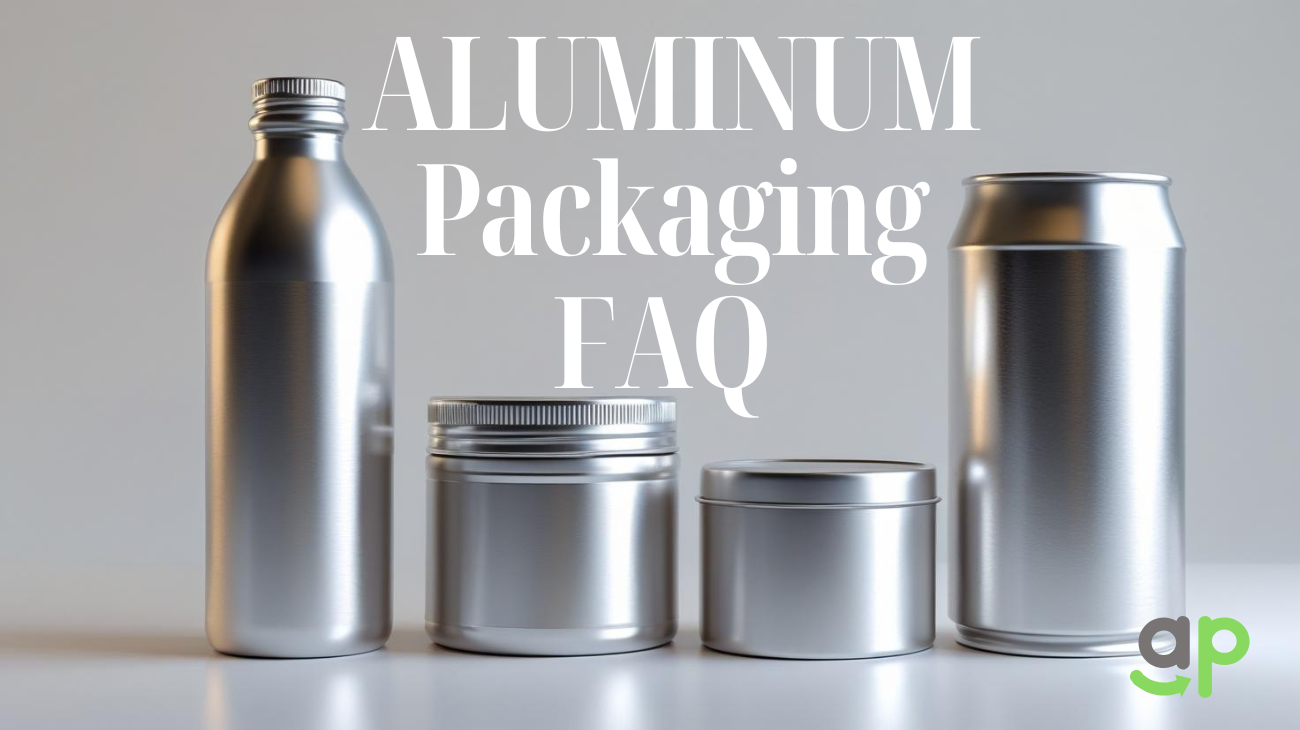
Aluminum packaging is becoming increasingly popular throughout many industries. Both suppliers and consumers seem to love this high-end metal packaging material and, due to its benefits, many companies are switching away from traditional plastic and glass packaging towards aluminum packaging. Since the popularity of aluminum packaging is on the rise, the questions and possible concerns that people may have about it are increasing as well. More and more people are reaching out to us with questions about aluminum packaging and the metal in general. This is why we have put together this article which briefly answers the most commonly asked questions we receive.
Aluminum Vs. Aluminium – What is Correct?
Answer: Depending on where you are from, both can be correct.
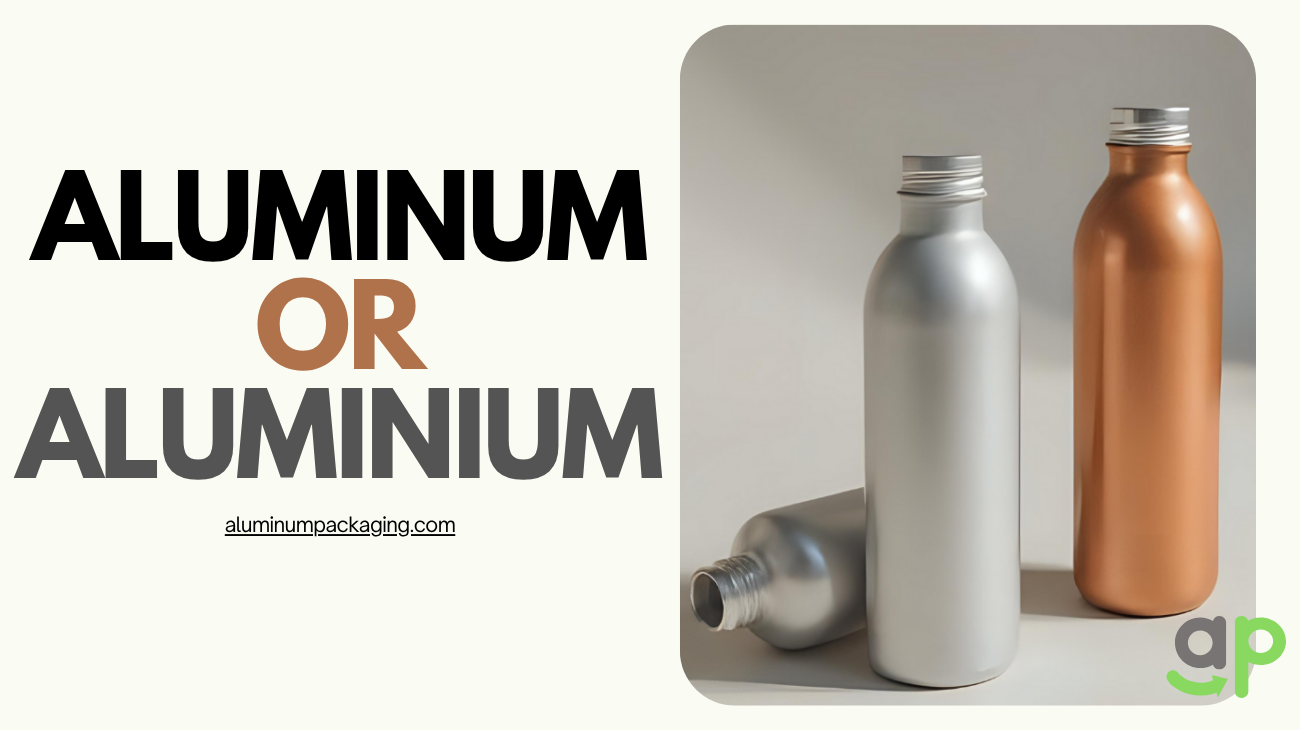
Let’s start off this article with an easy yet commonly asked question that has little to do with the properties of the metal and the packaging itself. We often get asked the question: Is it aluminum or aluminium? The answer to this question is simple and straightforward. Just as with many other words in the English language, both can be correct depending on where you are.
The original name for the metal is Aluminium, which is also commonly used throughout the entire world. In North America, however, people tend to write and pronounce the word slightly different: Aluminum. In 1925, the American Chemical Society officially adopted aluminum as the standard and correct way to address the metal. However, in the year 1990, the International Union of Pure and Applied Chemistry adapted Aluminium as the international standard. As a result, we have two different ways in which we can write the same word: Aluminum Vs. Aluminium. Whereas ‘aluminum’ is most commonly used in North America, the rest of the world uses ‘aluminium’. Luckily, the difference in writing is minor and, no matter how you address the metal, everybody will understand.
Does Aluminum Rust?
Answer: No, Aluminum does not rust.
Aluminum is a metal that does not contain any iron and thus does not rust. That being said, it is important to understand that, although aluminum does not rust, it does corrode. Aluminum corrosion is common and it can affect the quality of the metal. Because aluminum is a highly reactive metal, it reacts to oxygen when it comes in contact with air, water, or soil. As a result, a thin layer of coating of aluminum oxide is formed on top of the metal. This protective layer is solid and does not flake or fall off. As long as it stays intact, it forms a protective layer which prevents the aluminum from corroding further. When damaged, however, aluminum becomes vulnerable to corrosion and oxidation.
To prevent corrosion and oxidation, aluminum packaging materials always feature a food-grade coating. This coating has two main purposes. First, it creates a barrier between the metal and outside environment. As a result, the aluminum will no longer corrode and it will keep its original quality. Second, the coating also prevents the packaging content to get into direct contact with the aluminum packaging – ensuring that no heavy metals are leached into the product. Thanks to this coating, you won’t have to worry about rust or corrosion when using aluminum packaging.
For more information on this topic , please check out our article “Does Aluminum Rust” article for a more in depth look into this question.
Is Aluminum Magnetic?
Answer: No. But it’s complicated.
The generally accepted answer to this question is that aluminum is not magnetic. This is because, when observed in an every-day environment, aluminum does not attract any magnets because of its paramagnetic features. As such, under normal circumstances, aluminum does not display any magnetism. However, when aluminum is exposed to an extremely strong magnet, the metal appears to be slightly magnetic. This magnetism can, however, not be observed in daily-life or under normal circumstances. As such, it is widely accepted that aluminum is not magnetic, however, from a scientific point of view, aluminum does interact with (strong) magnets in very interesting ways.
More information and an in depth analysis on this topic can be found in our Is Aluminum Magnetic article.

What Is The Aluminum Melting Point?
Answer: Aluminum melts at 660 degrees Celsius or 1220 degrees Fahrenheit.
Aluminum is a metal with a relatively low melting point compared to other metals such as iron, brass, and copper. This low melting point is one of the key features why aluminum is easy and affordable to work with. Aluminum melts at a lower temperature, this less energy is needed in its production process. On top of that, aluminum can be easily shaped and molded into different shapes and sizes without the need of any force. This easy and low-cost production process makes aluminum a popular metal to work with throughout many industries. Not only are aluminum products easy and affordable to produce, the low-energy production process also is environmentally friendly and sustainable compared to that of many other metals.
Is Aluminum Food-Safe?
Answer: Yes, aluminum is food-safe.
Aluminum is a food-safe and non-toxic metal by nature. As a result, it can be safely used even in its pure form. That being said, aluminum packaging always comes with a food-grade coating. This coating mainly is applied to prevent possible heavy metal leaching as well as to make sure the aluminum packaging does not corrode. Although aluminum is a food-grade metal by nature, not all manufacturers use a food-grade coating. This is why it is still recommended to check with your supplier on whether the aluminum packaging you want to use is really food-safe and BPA-free. With the right coating applied, aluminum packaging is 100% safe to be used for storing cosmetics, food-products, beverages, and even pharmaceuticals.

Can I Be Allergic To Aluminum?
Answer: Although extremely rare, it is possible to be allergic to aluminum.
Aluminum allergy is a thing, however, it is extremely rare. It is estimated that less than 2% of the general public suffers from aluminum allergy. Most of these people will only have a reaction to aluminum when it comes into direct contact with the skin and is absorbed into the body. This can often be seen in aluminum-containing deodorants which, when applied, block sweat ducts. This may trigger an allergic reaction by some people in the form of itching, redness, and swelling at the site of application.
Aluminum allergy mainly occurs in combination with deodorant, which is why it is also referred to as ‘’deodorant allergy’’. In is solid form, such as packaging materials, it is extremely rare for people to have an allergic reaction to aluminum as the metal does not get absorbed into he skin. This is why aluminum allergy usually is not something to worry about when it comes to aluminum packaging. On top of that, and as previously mentioned, aluminum packaging always comes with a coating. This coating creates a barrier between us and the metal and ensures that the product, and our skin, is never in direct contact with the aluminum itself.
Is Aluminum Sustainable and Environmentally Friendly?
Answer: Yes. Aluminum is considered to be one of the most sustainable metals to work with.
According to a recent study, aluminum packaging is the most environmentally friendly option to choose from. Compared to plastic and glass, aluminum packaging affects our environment the least. These sustainable benefits of aluminum packaging are one of the main reasons why more and more companies and consumers are opting for products packed in aluminum.
Aluminum is one of the most commonly found metals on earth and it is easy and clean to extract. Due to its low melting point, aluminum is easy and affordable to process. It is furthermore light in weight which causes significantly less CO2 emissions when transported compared to heavier materials such as glass. Because aluminum does not break down when exposed to the elements and it does not contain any chemicals or toxins, it won’t affect and pollute the environment when disposed of.
Perhaps the most sustainable feature of aluminum packaging is its ability to be recycled unlimited times without ever losing its original properties and quality. This allows industries to reuse and recycle aluminum materials over and over again without the need of mining more virgin ores. Aluminum is commonly recycled, because of which nearly all aluminum products in circulation today contain at least a certain percentage of recycled metal. Recycling aluminum is an easy, cheap, and clean process. Thanks to this unlimited lifespan, aluminum is considered to be one of the most sustainable and environmentally friendly metals to work with.

Does Aluminum Packaging Contain BPA?
Answer: Aluminum is BPA-free but some companies may apply a BPA coating.
Aluminum does, by nature, not contain any chemicals or toxins such as BPA. That being said, aluminum packaging always comes with a protective coating. Depending on the type of coating used, some of these coatings may contain BPA. This is why it is always recommended to check with your supplier what type of coating is used. Although most manufacturers nowadays are using BPA-free coatings, it is not uncommon to find aluminum tins and bottles that still use BPA-coatings. Please be careful and always double-check with your supplier.
You may also like