
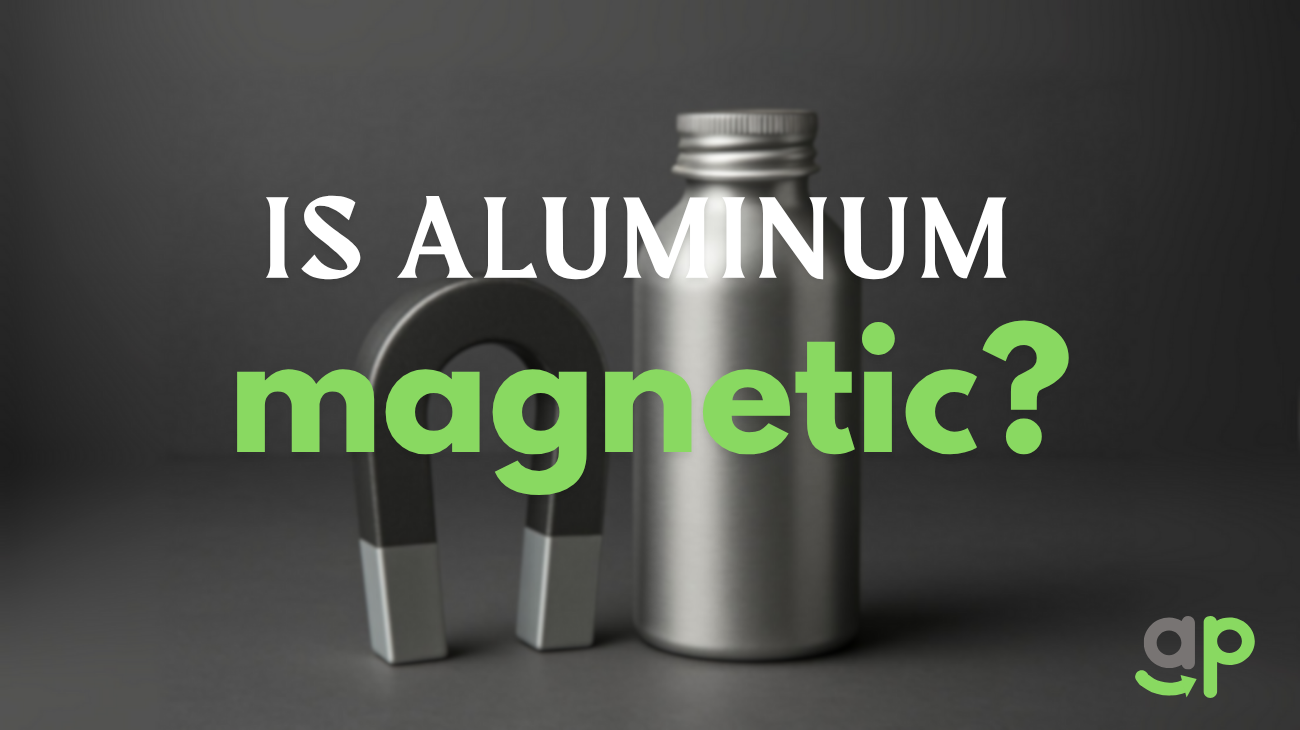
A commonly asked question is: Is aluminum magnetic? The simple and direct answer to this question is: No, aluminum is not magnetic. Aluminum is a paramagnetic metal, which means that, just like Magnesium and Lithium, it is not magnetic.
When we talk about magnetism, we often think about iron. This is because iron is a metal that is famously known for it being attracted to magnets due to its highly conductive nature. Aluminum, however, is the complete opposite. Although aluminum does, just like iron, have a high level of conductivity, it is not attracted to magnets in the same way.
When you hold a magnet next to a sheet of aluminum, you will notice that the metal won’t be attracted to the magnet. However, when you drop a high-quality and strong magnet through a long aluminum pipe, there are still hues of magnetism that can be observed. These hues can be observed as you will notice the magnet falling notably slowly through the aluminum pipe. This slow fall is created by magnetic repelling, which is are magnetic field created by the magnet while it passes through the aluminum pipe. This phenomenon is caused by the paramagnetic nature of aluminum.

What Does Paramagnetic Mean?
Paramagnetic metals such as aluminum, magnesium, and lithium have a composition that is similar to ferromagnetic materials. Although their composition is similar, the difference between paramagnetic and ferromagnetic metals is that the latter, ferromagnetic metals, are readily attracted to a physical magnet, whereas paramagnetic metals are not.
When you look closer into the nature of paramagnetic metals, you will find that they have unpaired electrons in their partially filled energy orbitals. They furthermore feature numerous dipoles which are not lined up on the direction of the applied magnetic field. Because some dipoles are misaligned, an obstruction is formed towards the magnetic field that is created by the aligned dipoles. This feature of paramagnetic metals makes them prefer external magnetic fields to some degree.
What this means is that, simply put, paramagnetic metals such as aluminum, magnesium, and lithium behave like a very weak magnet themselves. When they are exposed to a permanent and regular magnet, paramagnetic metals are only weakly attracted and, when you remove the external magnetic field, they immediately revert diamagnetism. As a result, they are not visibly attracted to magnets in the same way as ferromagnetic metals such as iron.
Despite this major difference between ferromagnetic and paramagnetic metals, both type of metals react the same way when they are exposed to extreme heat (Curie temperature). The curie point refers to a certain temperature at which a magnetic material undergoes a sharp decline in their magnetic properties. When exposed to extreme heat, both ferromagnetic and paramagnetic materials lose all their magnetic properties.
So, Is Aluminum Magnetic or Not?
Answering the question whether or not aluminum is magnetic is not that simple and straight forward. The best and most commonly accepted answer to this question is that, under normal circumstances, aluminum is not magnetic due to its paramagnetic nature. However, when exposed to an extremely strong magnet, aluminum can be slightly magnetic even though it does not exhibit magnetism under normal circumstances. As such, it is safe to say that, in strong magnetic fields, aluminum can become very slightly magnetic. However, in everyday experience it does not exhibit any of this magnetism. That being said, from a scientific point of view, aluminum does interact with magnets in very useful and interesting ways.